Gear & care
How to store smoking pellets and check for moisture damage
On this page · 7 sections
Straight answer
Keep unused smoking pellets dry and sealed; the Traeger Signature Blend bag specifically calls for indoor sealed storage even while pellets remain in the bag. Inspect before loading, and use your exact cooker’s hopper and auger instructions rather than a universal expiration date. [7] [1] [4] [6]
Start with condition, not a date
A sealed bag and a full hopper need different decisions. Traeger says a newly purchased or newly opened bag does not guarantee fresh pellets, and its storage support gives no exact lifespan: storage conditions and environment matter. [1]
Write the purchase and opening dates on your own storage note if that helps you rotate stock, but do not turn either date into a made-up discard deadline. Before the next cook, check the fuel itself and check what the manufacturer says about leaving it in that cooker. [1] [7]
This guide covers storage and present physical condition. It does not rank storage bins, certify a batch of fuel, or use a generated photograph to diagnose damage.
The storage decision tree
On a narrow screen, scroll the table sideways to compare all columns.
| Question | If yes | If no |
|---|---|---|
| Is the fuel’s intended use or identity unclear? | Set that bag aside while you check its label and your cooker manual. Keep the original packaging available. | Continue to the condition check. |
| Is the fuel wet, easily crumbled, or otherwise outside the maker’s condition guidance? [1] [5] | Keep it out of the hopper and replace poor-condition fuel; use model guidance for pellets already inside. [5] | Continue, without treating this screen as proof of every aspect of fuel quality. |
| Is the unused fuel still in an unopened bag? | For the inspected Traeger Signature bag, place the bag indoors in a sealed container; the label explicitly includes pellets still inside the bag. [7] | Protect the remaining fuel in dry sealed storage; the Pit Boss manual specifies an airtight container. [6] |
| Are there pellets in the hopper or auger? | Look up both components in your exact manual. The schedules and extended-non-use instructions below differ. [3] [4] [6] | Keep the unused stock protected until loading. [7] [6] |
| Does a non-use or maintenance instruction apply now? | Follow that model’s complete procedure; emptying a hopper is not the same task as clearing an auger. [4] [6] | Recheck condition and storage before the next cook; a maintenance interval is not a fuel freshness guarantee. [1] [4] |
The first branch is a documentation check, not a test you can perform by looking at a pellet. The other branches help you decide where to put unused fuel and when to consult the cooker’s maintenance instructions.
An unopened bag still needs a storage plan
The actual Traeger Signature Blend back panel gives a useful instruction that “unopened” advice often misses: store the pellets indoors in a sealed container even while they remain in the bag. Its next bullet says to remove unused hopper pellets during extended non-use, without defining that period as a number of days. [7]
An indoor location alone does not settle the moisture question. Traeger’s storage guide warns that humidity can reach even unopened bags in a garage; it advises keeping pellets dry and airtight, so choose the place and container together. [10]
Keep the storage spot separate from heat sources and other fuel containers. That instruction appears on the inspected Weber GrillMaster Blend back panel, alongside a direction to consult the pellet grill owner’s guide. [8]
Three brands: what the labels and manuals actually say
The comparison separates a package observation from an appliance instruction. The Traeger and Weber package backs were readable; the Pit Boss observation is the Competition Blend front, so its unseen back is not evidence of a storage rule. [7] [8] [9]
On a narrow screen, scroll the table sideways to compare all columns.
| Brand / exact context | Bag condition and actual label | Container / environment | Hopper and auger | Visible condition / limits |
|---|---|---|---|---|
| Traeger Pro 575 / 780, US manual DOC419V-A (wood cooking pellets); current storage/cleaning support and Signature Blend back [2] | Newly bought/opened does not prove freshness. The inspected back includes sealed indoor storage even while inside the bag. [1] [7] | Dry, airtight storage; garage humidity can matter. [10] | General cleaning support recommends monthly hopper emptying and sawdust removal, adjusted to cooking habits. Bag says remove hopper leftovers before extended non-use; no duration specified. [3] [7] | Easy crumbling is a warning; bag-to-bag color variation can be natural. No exact lifespan supplied. [1] |
| Weber; Searwood 600 / XL 600 US manual 8651007, US_WEB, 12/16/24; GrillMaster Blend 190001 back | Back panel directs readers to the owner’s guide and away from heat-producing appliances and other fuel containers. No separate unopened/opened expiry is given here. [8] | Manual: unused pellets indoors in an airtight container. [4] | Purge and empty BOTH hopper and auger tube every 4 weeks with regular use; every 2 weeks without regular use, and more frequently in high humidity. [4] | Manual describes pellets snapping rather than crumbling; apply the whole-bag condition check, not a color-only verdict. [4] [1] |
| Pit Boss; Sportsman 850 PB850SPW2 official-linked manual; current FAQ; Competition Blend 20-lb front | Observed front identifies BBQ hardwood pellets. Back-panel storage text was not observed. [9] | Manual specifies airtight storage; its outdoor-storage warning addresses rain/high humidity entering the hopper. [6] | For extended non-use, clear pellets from BOTH hopper and auger. The cited passage gives no number of days. [6] | FAQ describes a crisp snap and slight shine, and says to replace pellets in poor condition. [5] |
These are different instructions, not three estimates of the same shelf life. In particular, Weber’s four-week maintenance interval is not permission to ignore wet fuel until the fourth week; Weber also calls for more frequent cleaning in high humidity. The Pit Boss phrase about extended non-use cannot honestly be converted to “one week” or “one month.” [4] [6]
Check a handful before loading
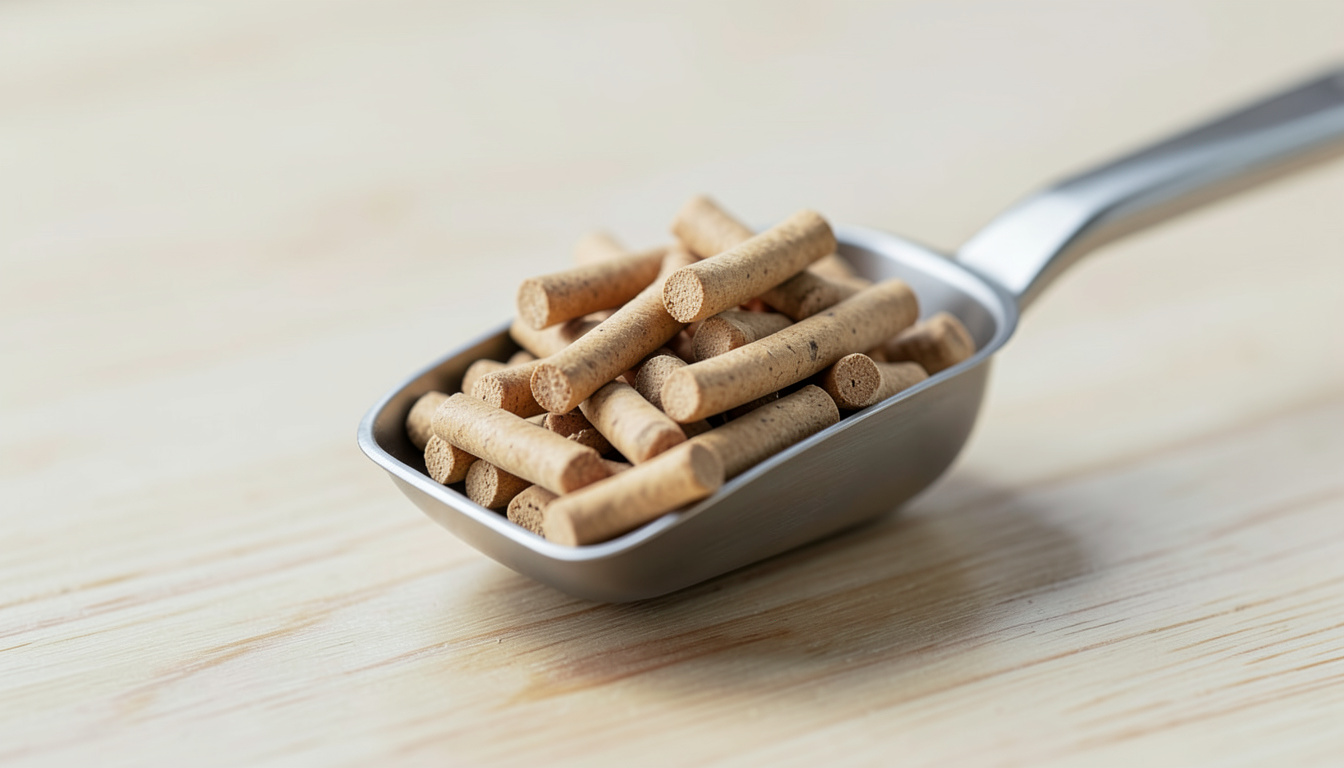
Traeger flags pellets that easily crumble; Pit Boss describes pellets that snap crisply and look slightly shiny. Pit Boss’s practical direction is to replace fuel that is no longer in good condition. [1] [5]
Use color cautiously. Traeger explains that color varies naturally from bag to bag, so a lighter pellet by itself is a weak reason to reject an otherwise documented bag. [1]
Treat this as a screen for obvious physical deterioration, not a home laboratory result. If the fuel is visibly wet or crumbly, a positive-looking pellet from the top should not overrule what you found elsewhere in the container. [1] [5]
Handle hopper leftovers with the model manual open
A hopper is the reservoir; the auger is part of the feed path. The distinction matters because both the Searwood schedule and the named Pit Boss manual explicitly include the auger, while Traeger’s general monthly table names the hopper. [4] [6] [3]
Read the full procedure before beginning. A powered purge and manual cleaning are different operations, so this storage comparison is not a replacement sequence for shutdown, cooling, disconnection or restart; use the instructions for the exact cooker in front of you. [4] [6]
Make one storage record for this cooker
Keep these fields blank until you check your own bag and manual. Recording dates helps you remember what happened; it does not create an expiration rule. [1]
These entries are personal notes. They are not sent to a restaurant or submitted to this site.
Copy the model and document identifier, not just the brand.
Keep the bag panel or a readable photo with this record.
Describe what closes the container and how the location stays dry.
Personal reminders only; do not infer a universal shelf life.
Note wet fuel, crumbling or other observations without inventing a test result.
Copy the model-specific instruction.
Record separately from the hopper.
Sources and method
- Traeger pellet support: storage, condition and lifespanSource checked · support.traeger.com
- Traeger Pro 575 / 780 US manual DOC419V-ASource checked · traegergrills.a.bigcontent.io
- Traeger cleaning support: public full-article API captureSource checked · support.traeger.com
- Weber Searwood 600 / XL 600 US manual 8651007, 12/16/24Source checked · digital-assets.weber.com
- Pit Boss current FAQ: pellet condition and storageSource checked · www.pitboss-grills.com
- Pit Boss Sportsman 850 PB850SPW2 official-linked manualSource checked · images.salsify.com
- Actual Traeger Signature Blend back label: storage panelSource checked · cdn.media.amplience.net
- Actual Weber GrillMaster Blend 190001 back labelSource checked · product-images.weber.com
- Actual Pit Boss Competition Blend 20-lb front labelSource checked · cdn.shopify.com
- Traeger guide: how to store wood pelletsSource checked · www.traeger.com


How this article is prepared
Researched and drafted with AI assistance from the cited sources. Examples and calculations retain their stated assumptions; illustrations do not establish restaurant visits or equipment tests.
About BBQ Explorer