Beef4 cuts in this guide
Brisket, beef back ribs, short ribs, and chuck roast make up this section.
Explore beef cutsAmerican barbecue is a small number of cuts cooked a small number of ways with a small number of woods — and a long list of regional opinions about which combination is correct. This page maps the pieces. Every specific carries a link to the source it came from.
Sources include FDA, Weber, Traeger, AmazingRibs, Meat Church, ThermoWorks, Hey Grill Hey, and regional public-history and tourism organizations.
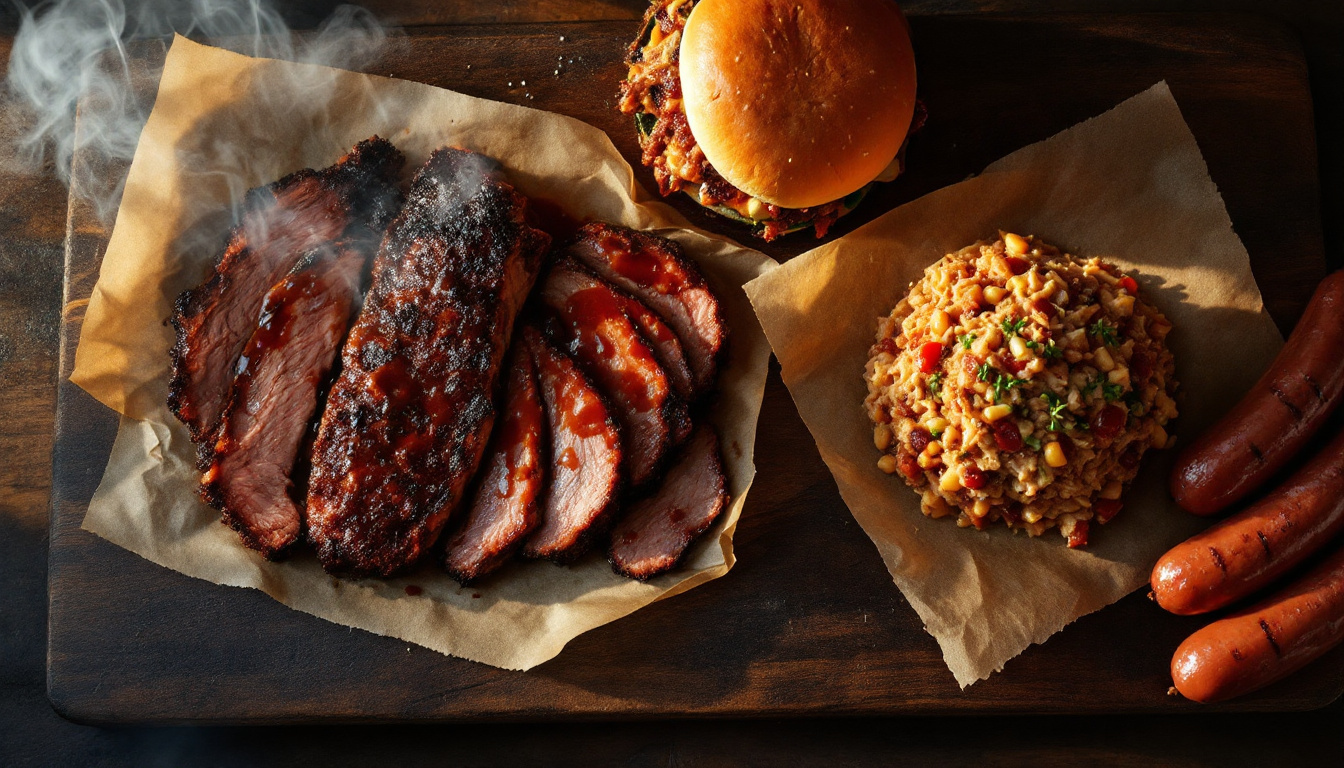
Beef, pork, poultry, sausage, and a few regional specialties account for almost every cut on every pit. Click a family to see its cuts below.
Brisket, beef back ribs, short ribs, and chuck roast make up this section.
Explore beef cutsPork shoulder, spare ribs, baby back ribs, St. Louis–cut ribs, and pork belly appear together here.
Explore pork cutsWhole chicken, chicken wings, and whole turkey form the poultry section.
Explore poultry cutsSmoked sausage links have a dedicated section alongside the whole-cut entries.
Explore sausage cutsWhole hog and lamb ribs round out the guide in this section.
Explore specialty & exotics cutsEach cut card lists where it lives on the animal, the smoker and target temperatures, an approximate cook time, the woods that fit, and the regional styles that made it famous. Sources are listed at the bottom of each card.




Choose a cut and use only the bounded timing evidence available in this guide.
No bounded rest range in our sources.
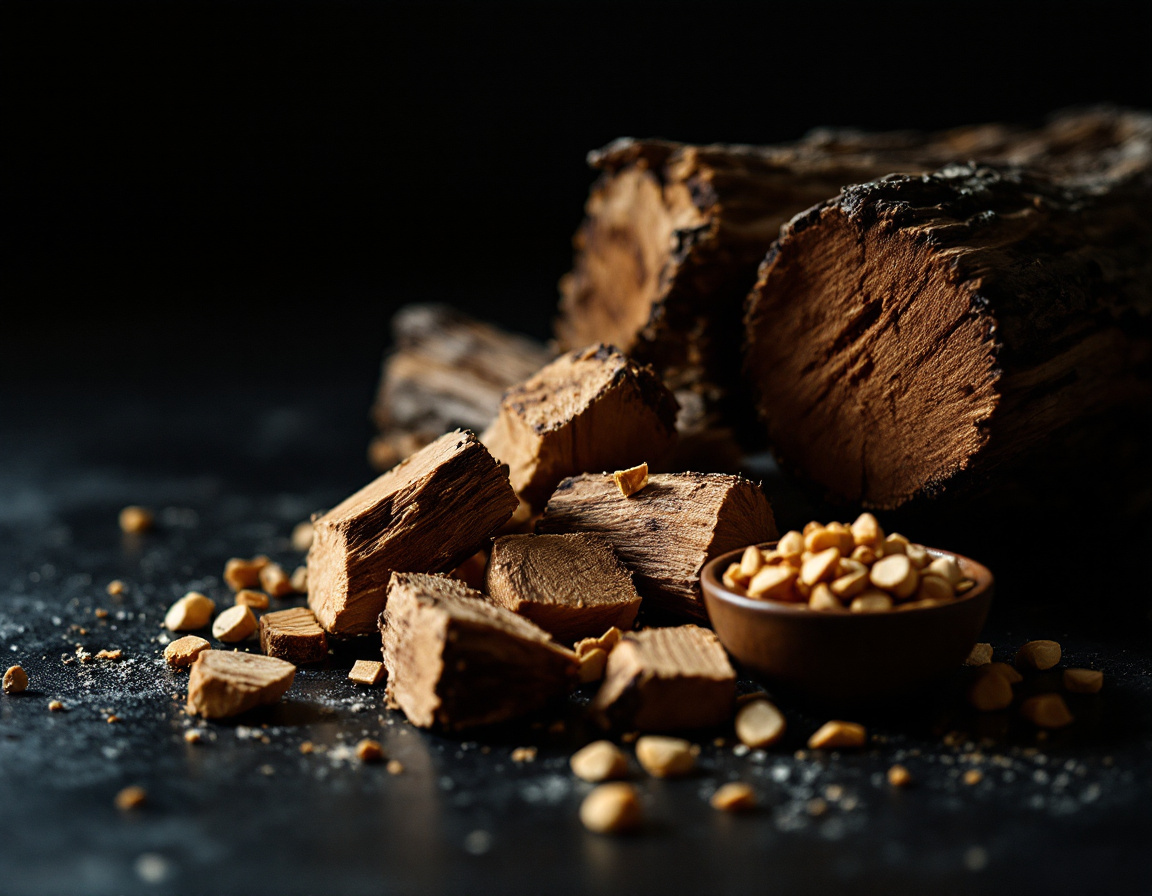
Each mark below checks explicit cut labels against each source’s exact pairing terms. Chicken can match a source’s Chicken or Poultry label, but Chicken does not widen to Turkey, and broad phrases such as “Most meats” do not become category matches. The two sources sometimes differ — both are shown, and blank cells stay blank.
Source wording shown side by side, not ranked or converted to a numeric scale.
| Wood | Beef | Pork | Poultry | Sausage | Specialty & Exotics | ||||||||||
|---|---|---|---|---|---|---|---|---|---|---|---|---|---|---|---|
| Beef Brisket | Beef Back Ribs | Beef Short Rib | Chuck Roast | Pork Butt (Shoulder) | Spare Ribs | Baby Back Ribs | St. Louis–Cut Ribs | Pork Belly | Whole Chicken | Chicken Wings | Whole Turkey | Smoked Sausage Links | Whole Hog | Lamb Ribs | |
| Apple | —Neither Weber [1] nor Traeger [2] lists sausage as a category. | ||||||||||||||
| Cherry | —Neither Weber [1] nor Traeger [2] lists sausage as a category. | ||||||||||||||
| Hickory | —Neither Weber [1] nor Traeger [2] lists sausage as a category. | ||||||||||||||
| Mesquite | —Neither Weber [1] nor Traeger [2] lists sausage as a category. | ||||||||||||||
| Pecan | —Neither Weber [1] nor Traeger [2] lists sausage as a category. | ||||||||||||||
| Post Oak (Central TX) | —Neither Weber [1] nor Traeger [2] lists sausage as a category. | ||||||||||||||
Hickory selected
Savory and Classic
Strong flavor that complements most meats
Sources: Weber — Six Best Wood Flavors for Smoking [1] · Traeger — Wood Pellet Guide [2]
The same protein, cooked on the same pit, can land in nine different regional traditions. Each card shows only the details established by its cited source and identifies any important evidence gaps.
Signature: Post oak is the classic Central Texas wood choice for beef
Evidence gap: The source does not detail a standard rub or sauce.
Signature: Burnt ends and a thick sauce are both prominent in the local style guide
Signature: Rendezvous is cited for dry-rub ribs, contrasted with ribs mopped with sauce elsewhere
Evidence gap: The source does not identify a smoking wood.
Signature: The state history describes East Texas cooks adapting Southern pork customs to plentiful beef
Evidence gap: The source does not specify a rub or smoking wood.
Source: Texas Historical Commission — Texas Barbecue History
Signature: No single South Texas formula is defined in the retrieved statewide history
Evidence gap: The statewide history does not define a South Texas rub, sauce, wood, or cut.
Source: Texas Historical Commission — Texas Barbecue History
Signature: Whole hog cooked low and slow, then finished with vinegar-pepper sauce
Evidence gap: The source does not specify a rub.
Signature: Pork shoulder served chopped or sliced with tomato-based dip and red slaw
Evidence gap: The source does not specify a rub.
Signature: Mustard is one of the state’s four documented barbecue-sauce styles
Evidence gap: The source does not specify a rub or smoking wood.
Signature: White barbecue sauce was initially used on chicken
Evidence gap: The source does not specify a rub or smoking wood.
Source: Encyclopedia of Alabama — Big Bob Gibson’s White Sauce
FDA publishes safe-minimum internal temperatures. Pitmasters pull at higher temperatures because texture, not safety, is the goal. Slide the probe to see which category the temperature lands in.
| Category | Min internal | Rest |
|---|---|---|
| Beef, pork, lamb, veal: steaks, chops, roasts | 145 °F | 3-minute rest |
| Ground meats | 160 °F | none |
| Poultry: ground, parts, whole, and stuffing | 165 °F | none |
| Source: FDA — Safe Food Handling | ||
FDA lists 145°F for steaks, chops, and roasts of beef, pork, veal, and lamb, followed by a 3-minute rest. Ground meat is listed at 160°F .
FDA lists 165°F for poultry, including whole birds and parts . The cited whole-chicken recipe uses 165°F in the breast and 175°F in the thighs .
AmazingRibs gives 14–18 hours for a whole packer at 225°F, foil-wrapped when it reaches the stall. That total includes about 2 hours of holding time .
AmazingRibs gives 195–205°F as a rule-of-thumb range, while instructing cooks to confirm the brisket is tender by feel .
The cited method smokes the ribs for 3 hours, wraps them with liquid for 2 hours, then unwraps, sauces, and finishes for 1 hour .
The National Pork Board says back ribs come from the blade and center of the pork loin and are smaller than spareribs. Spareribs come from the belly; St. Louis–style ribs are a squared cut of spareribs .
Weber calls post oak the classic Central Texas choice for beef. Its guide also pairs hickory with beef and describes mesquite as an assertive wood often blended with milder woods .
The Encyclopedia of Alabama describes white sauce as an Alabama barbecue seasoning made with mayonnaise, apple cider vinegar, lemon juice, black pepper, and salt, and says it was initially used on chicken .
We captured each cited page once for the August 2026 source audit and manually reviewed the guide’s claim-bearing text against that capture. “Retrieved” is the UTC capture date; it is not a live link check or a guarantee that the publisher has not changed the page.
No cut, temperature, or pairing on this page is asserted from memory. If a source disagrees with another, both are listed. Recipe pull temperatures can sit above the federal safe-minimum floor and that is intentional — the floor is a safety number; the pull number is a texture number.