Regions
Santa Maria barbecue: tri-tip, top block and the traditional plate
On this page · 6 sections
Straight answer
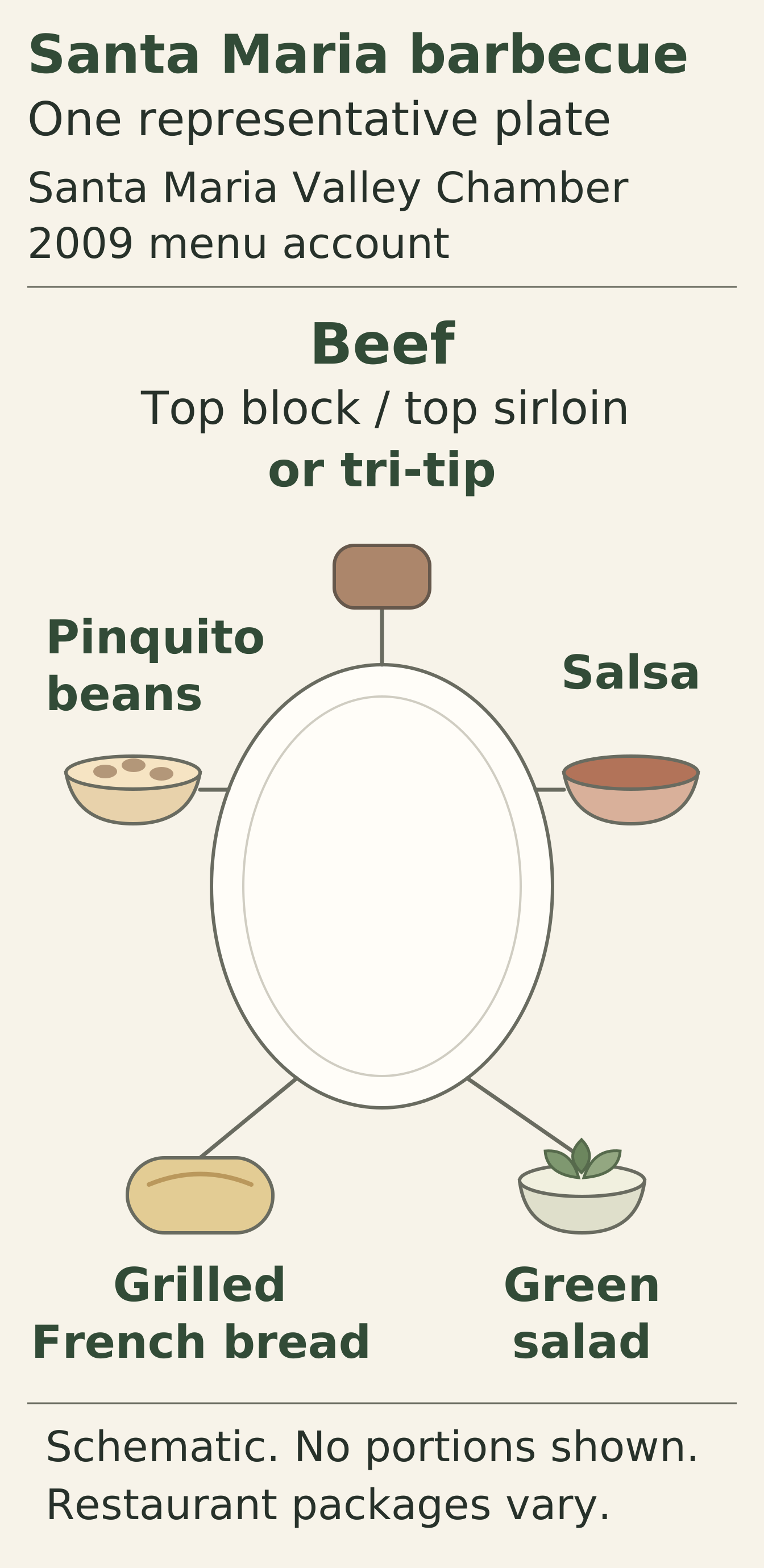
Santa Maria barbecue includes top-block sirloin as well as tri-tip. The Chamber’s representative menu pairs beef with pinquito beans, salsa, grilled French bread and green salad; the regional history describes red-oak cooking. [1] [2] The three dinner menus below show why the beef cut and included sides need checking separately. [6] [7] [8]
Tri-tip and top block are different cuts
Top-block sirloin precedes tri-tip in Santa Maria Valley’s tourism history. Diane Bock’s KQED reporting explains top block as another name for top sirloin. [1] [3]
USDA’s Fresh Beef specification identifies tri-tip as bottom sirloin in item 185C. That distinguishes the cuts; it does not establish an exact purchasing specification for every local menu’s top-block label. [10]
Red oak appears in the tourism account of ranch gatherings and in the Swiss and Hitching Post 1 menu descriptions. Far Western’s dinner image says oak grilled without identifying the oak species. [1] [7] [8] [6]
A representative plate, with room for menu variation
On a narrow screen, scroll the table sideways to compare all columns.
| Component | Named item | What the label means |
|---|---|---|
| Beef | Top block / top sirloin or tri-tip. [2] [3] | The tourism account describes the earlier top-block cut; USDA separately places tri-tip in bottom sirloin. These symbols do not show anatomy. [1] [10] |
| Beans | Pinquito beans. [2] | The Chamber account describes slow-cooked pinquitos; this label does not specify a restaurant’s recipe. [2] |
| Salsa | Fresh salsa. [2] | An accompaniment in the Chamber account, without a required recipe or serving amount. [2] |
| Bread | Grilled French bread. [2] | The Chamber description pairs it with melted butter. [2] |
| Salad | Tossed green salad. [2] | A separate accompaniment in that account, without a universal dressing formula. [2] |
Six dated accounts of the tradition
Santa Maria Valley’s tourism history traces the tradition to mid-1800s ranch gatherings for vaqueros, family and friends. Its account combines shared meals and red-oak cooking; it does not identify one inventor of the regional meal. [1]
On a narrow screen, scroll the table sideways to compare all columns.
| Date | Event or account | Source / scope |
|---|---|---|
| Mid-1800s | Ranchers host vaqueros, family and friends. [1] | Santa Maria Valley tourism retrospective, rather than independently examined ranch records. [1] |
| 1904 | Volunteers at Santa Maria’s Fourth of July barbecue. [3] | KQED’s caption credits the Santa Maria Historical Society photograph; the caption supplies the date. [3] |
| 1931 | Santa Maria Club begins its recurring Stag Barbecue. [1] | Santa Maria Valley tourism account. [1] |
| 1950s | Tri-tip joins top-block sirloin, with Bob Schutz credited in the account. [1] | Santa Maria Valley tourism retrospective; popularization is distinct from a proved first invention. [1] |
| 1952 | Ostini family hosts at Hitching Post 1 in Casmalia. [9] | The restaurant’s homepage says the family has hosted since 1952. [9] |
| 1958 | Clarence and Rosalie Minetti, Richard and Jean Maretti establish Far Western Tavern. [4] | Operator history places the original restaurant in Guadalupe’s Palace Hotel; its present home is Orcutt. [4] |
The Schutz stories differ in their work-location details. KQED calls its Safeway account local lore; the Chamber’s December 2009 retelling quotes Clarence Minetti through R.H. Tesene’s book as associating Schutz with the Santa Maria Market. [3] [11]
Those retellings support attributed history, not a settled claim about who first grilled or named tri-tip. The earlier top-block account also makes a tri-tip-only definition too narrow. [1] [3] [11]
Sources and method
- Santa Maria Valley: A Brief History of Santa Maria Style BarbecueSource checked · santamariavalley.com
- Santa Maria Valley Chamber: The Santa Maria Style Barbecue Menu (February 17, 2009)Source checked · santamariavalleybbq.wordpress.com
- Diane Bock, KQED: Santa Maria Barbecue, It’s Not Just Tri-TipSource checked · www.kqed.org
- Far Western Tavern: Our StorySource checked · farwesterntavern.com
- Far Western Tavern: Dinner MenuSource checked · farwesterntavern.com
- Far Western Tavern: Dinner menu image (filename: October 2024)Source checked · farwesterntavern.com
- The Swiss: Dinner MenuSource checked · www.swissrestaurantandbar.com
- Hitching Post 1, Casmalia: Dinner MenuSource checked · hitchingpost1.com
- Hitching Post 1, Casmalia: HomepageSource checked · hitchingpost1.com
- USDA IMPS Fresh Beef, effective November 2014Source checked · www.ams.usda.gov
- Santa Maria Valley Chamber: The Origins of Santa Maria Tri-Tip (December 17, 2009)Source checked · santamariavalleybbq.wordpress.com

How this article is prepared
Researched and drafted with AI assistance from the cited sources. Examples and calculations retain their stated assumptions; illustrations do not establish restaurant visits or equipment tests. Additional editorial and image review is pending.
About BBQ Explorer