Ordering
Beef ribs on a BBQ menu: back, plate and chuck cuts
On this page · 4 sections
Straight answer
Beef back ribs, plate short ribs and chuck short ribs are different cuts: USDA’s definitions distinguish back ribs 124, short-plate ribs 123A and chuck short ribs 130. [1] A menu still needs its own cut description; Gee’s separate back-rib and dino-rib entries show why a large-sounding name alone is not enough. [3] Ask which cut is being served, then check whether the price is per rib, per rack or per pound.
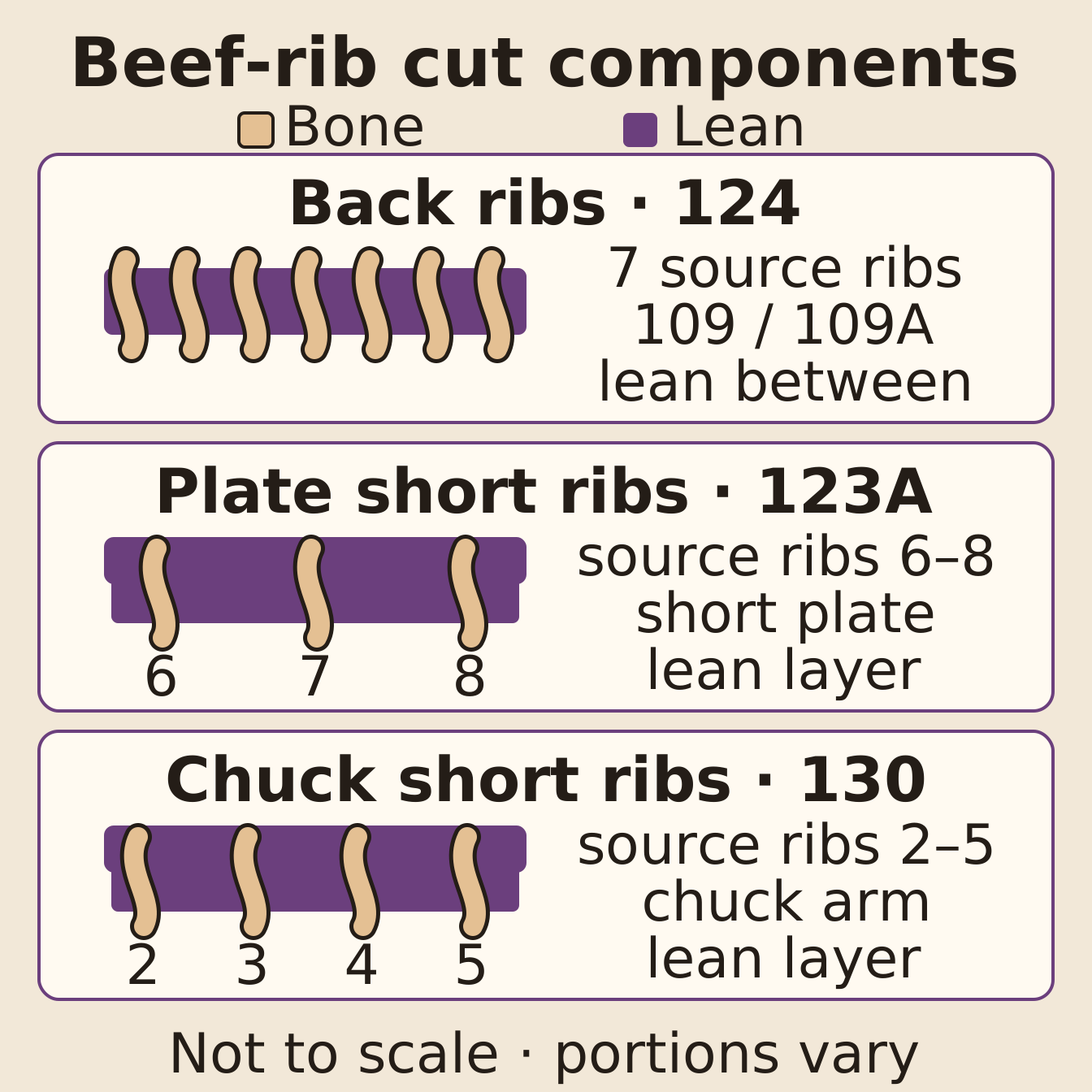
What the three cut names identify
The drawing uses Fresh Beef Series 100, effective November 2014, which the AMS index linked separately from its draft when checked on October 3, 2026. [1] [2] The numbers below identify the source definitions; they do not identify a restaurant’s supplier.
AMS describes IMPS as voluntary consensus specifications used in meat procurement. [2] They provide vocabulary for the comparison, without certifying that a menu item meets every requirement.
- Back ribs — 124: the intact seven-rib portion from items 109/109A contains intercostales interni, the lean between the ribs. Chine and feather bones are removed. [1] Seven describes that source item, not the count in an unspecified restaurant rack.
- Short-plate ribs — 123A: the source is ribs 6, 7, 8 of the short plate, with serratus ventralis continuous across the cut surface for at least two ribs on both the dorsal and ventral sides. Exterior fat cover and latissimus dorsi are removed; the definition also refers to item 123’s purchaser-specified rib count and width. [1]
- Chuck short ribs — 130: the source can be the arm portion of an IMPS chuck, including ribs 2–5, intercostales interni and serratus ventralis. The specified trim leaves practically no surface fat; the dorsal edge has no cartilaginous rib-to-vertebra junctions. [1] A two-rib serving is not a drawing of this whole supplier cut.
Short ribs alone does not establish short-plate origin: the general 123 definition permits rib or plate origin, while 123A specifies the short plate. [1] Confirm the actual cut rather than using the photograph’s apparent size.
Four checks before accepting a rib
- Name the cut: is this back rib, plate short rib, chuck short rib or a cut the menu leaves unspecified?
- Confirm the selling unit: one rib, a rack, a two-rib item or weight-priced meat. Ask the rib count when a rack leaves it unclear.
- Ask what the charged weight includes and whether any bone weight is deducted. Keep that answer separate from estimates of edible meat.
- Confirm the total for the rib or item being offered, plus any sides you want, before accepting the order.
For broader price-unit context, the site’s barbecue cost guide compares published restaurant pricing and raw-to-cooked assumptions. Keep this decision focused on the named cut, the selling unit and the actual item being offered.
Sources and method
- USDA Fresh Beef Series 100, effective November 2014Source checked · www.ams.usda.gov
- USDA AMS Institutional Meat Purchase Specifications indexSource checked · www.ams.usda.gov
- Gee’s BBQ Santa Ana menuSource checked · www.geesbbq.com
- Shorty’s Toledo food menuSource checked · shortystoledo.com
- Black’s Barbecue: Beef Ribs vs. Pork Ribs, September 11, 2026Source checked · www.blacksbbq.com
- Black’s Barbecue San Marcos menu and Giant Beef Ribs detailSource checked · www.blacksbbq.com
- Stiles Switch Austin food menuSource checked · austin.stilesswitchbbq.com
How this article is prepared
Researched and drafted with AI assistance from the cited sources. Examples and calculations retain their stated assumptions; illustrations do not establish restaurant visits or equipment tests. Additional editorial and image review is pending.
About BBQ Explorer