Ordering
Pulled vs chopped pork: source cut and serving form
On this page · 5 sections
Straight answer
Pulled and chopped describe serving forms; neither label tells you whether the pork came from shoulder or whole hog. Published operator descriptions pair both shoulder and whole hog with pulled or chopped pork. [1] [2] [3] [4] Ask what was cooked and how it is served as two separate questions.
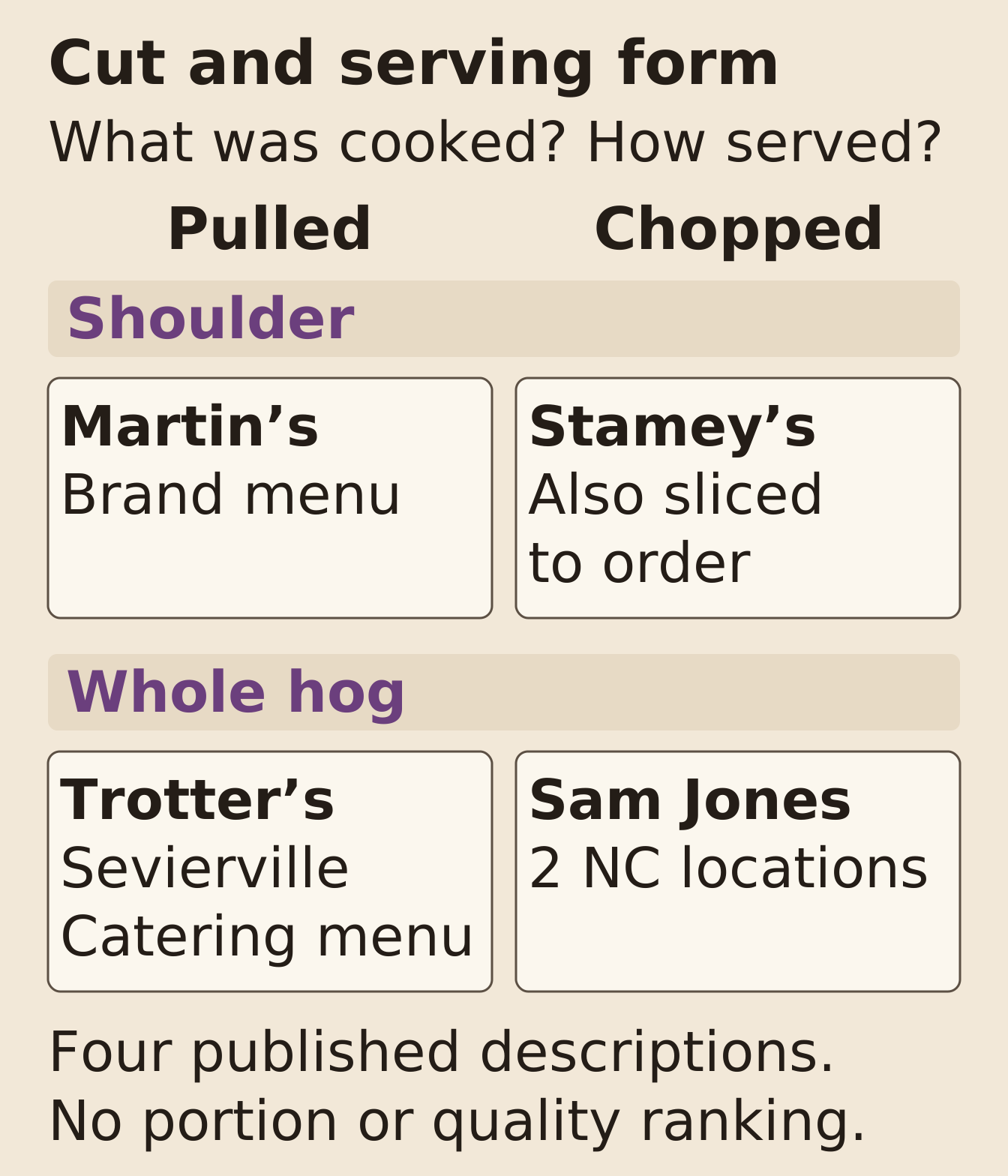
Two questions, four published examples
Read the rows as what the kitchen says it cooked and the columns as how the pork is described at service. The four examples below show why a serving label cannot substitute for a source-cut answer. [1] [2] [3] [4]
On a narrow screen, scroll the table sideways to compare all columns.
| Stated source | Pulled | Chopped |
|---|---|---|
| Shoulder | Martin’s Bar-B-Que Joint food menu labels pulled pork shoulder. Brand-menu description; no shoulder subdivision identified. [1] | Stamey’s published pit-practice account identifies shoulder, chopped or sliced to order. The chart uses its chopped option; sliced remains part of that description. [2] |
| Whole hog | Trotter’s Sevierville catering menu describes whole-hog pulled pork. This is the catering menu, not an inferred dine-in plate. [4] | Sam Jones BBQ’s operator statement says whole hogs are chopped and served daily at its two North Carolina locations. [3] |
The entries come from different kinds of descriptions: a brand food menu, a pit-practice account, an operator statement and a catering menu. They identify four examples; they do not establish four mutually exclusive methods or a statewide rule. [1] [2] [3] [4]
Martin’s and Stamey’s identify shoulder without specifying a subdivision such as butt or picnic. Keep that broader source label when describing their pork instead of assigning a more specific cut. [1] [2]
A dated account explains mixing at service
In a Southern Foodways Alliance oral history, Rien Fertel interviewed Rodney Scott at Scott’s Bar-B-Que in Hemingway, South Carolina, on June 21, 2012. Asked whether customers could select which part of the hog they ordered, Scott described pulling the meat and mixing it together. [6]
That account explains a finishing practice in that kitchen at that time. It supplies no exact proportions for an individual order and does not establish how every whole-hog restaurant, or a present-day menu, serves its pork. [6]
Ask about the order you are choosing
Use the menu’s words to start a conversation about that item. When the source or finishing detail is missing, ask for it directly and leave an unanswered detail unknown.
- Is this pork from shoulder or whole hog? If shoulder, does the kitchen identify a more specific cut?
- Is this item served pulled, chopped or with a choice? Does the option apply to my location and ordering channel?
- Is sauce already mixed into the meat, added on top, served separately or some combination?
- Is any skin included in this particular order?
- Does the style name here describe the source, the sauce or the presentation? Which details are still unspecified?
The meat guide provides broader cut background. For restaurant context around the examples, browse the Raleigh guide and Memphis guide; this comparison addresses the words used for the pork you are ordering.
Sources and method
- Martin’s Bar-B-Que Joint official food menuSource checked · www.martinsbbqjoint.com
- Stamey’s official history and pit-practice descriptionSource checked · www.stameys.com
- Sam Jones BBQ official home pageSource checked · www.samjonesbbq.com
- Trotter’s Whole Hog BBQ official Sevierville catering menuSource checked · trottersbbq.com
- Central BBQ official East Memphis / Poplar menuSource checked · eatcbq.com
- SFA Rodney Scott interview transcript, Scott’s Bar-B-Que, Hemingway, June 21, 2012Source checked · www.southernfoodways.org
How this article is prepared
Researched and drafted with AI assistance from the cited sources. Examples and calculations retain their stated assumptions; illustrations do not establish restaurant visits or equipment tests. Additional editorial and image review is pending.
About BBQ Explorer