Regions
Chicago barbecue: rib tips, hot links and aquarium smokers
On this page · 7 sections
Straight answer
Chicago has a documented South Side barbecue tradition built around rib tips, hot links and aquarium smokers. The Southern Foodways Alliance connects it with the Great Migration; practitioner accounts describe glass viewing sides, meat over direct heat and a smoke exhaust stack. [9] [5] [7]
A tradition with named practitioners
The examples below distinguish Lem’s in Chicago’s Chatham neighborhood, Uncle John’s in Homewood and Robinson’s in Oak Park. Homewood and Oak Park are metropolitan examples, not Chicago-city addresses. [1] [5] [3]
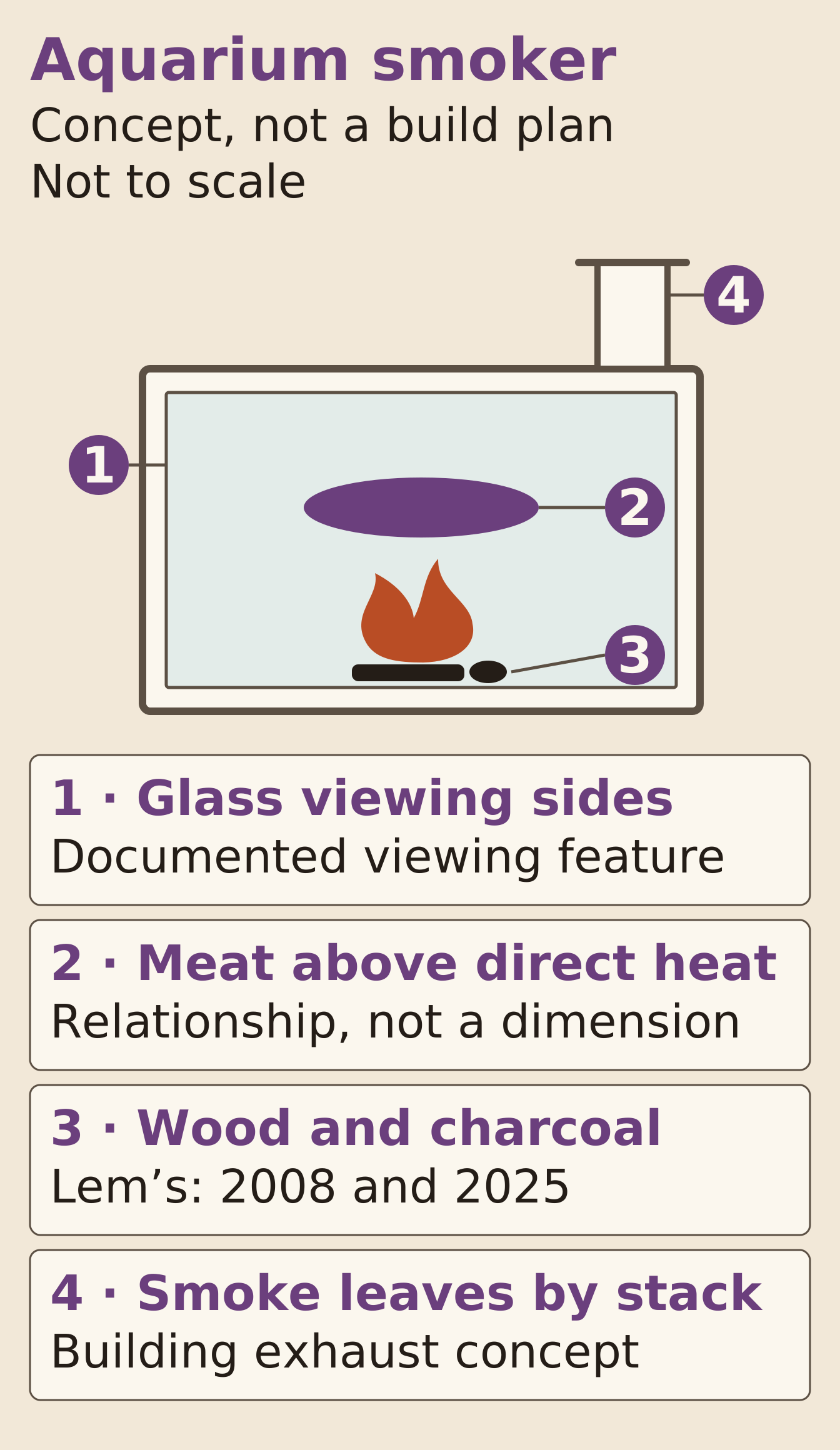
What the aquarium-smoker diagram shows
The viewing glass and direct-heat relationship appear in WLS’s 2018 Homewood report and WTTW’s 2025 transcript. The four features below explain the drawing; they do not supply dimensions, construction materials or instructions for operating an indoor fire. [5] [7]
On a narrow screen, scroll the table sideways to compare all columns.
| Feature | Documented account | Scope of the drawing |
|---|---|---|
| 1. Glass viewing sides | WLS describes clear-sided smokers; WTTW describes watching through glass. [5] [7] | A viewing feature, without a glass grade, thickness or fabrication specification. |
| 2. Meat above direct heat | WLS describes meat directly over flame; WTTW describes cooking over direct heat. [5] [7] | Relative placement only; no grate height, number of cooking tiers or measured heat output. |
| 3. Wood and charcoal | James Lemons described wood and charcoal in 2008; the foundation’s 2025 Lem’s account names hickory wood, charcoal and fire. [8] [10] | Lem’s dated fuel examples, not a requirement for every aquarium smoker. |
| 4. Smoke leaves by a stack | WTTW describes a stack carrying smoke out of the building. [7] | An exhaust concept, without a duct route, airflow rate or code-compliance claim. |
Three histories, with their own limits
These accounts identify people and businesses associated with the tradition. A business’s own chronology, a dated practitioner interview and an award record answer different historical questions; they should remain attributed.
On a narrow screen, scroll the table sideways to compare all columns.
| Operator and place | Documented history | What the account does not establish |
|---|---|---|
| Lem’s — Chicago / Chatham | The operator dates Bruce and Myles Lemons’s first store to 1954 and its second, Chatham store to 1968. The James Beard Foundation selected Lem’s for its 2025 America’s Classics Award. [1] [10] | The brand dates differ from the 2008 interview below; the award is not proof of sole invention. |
| Uncle John’s — Homewood | In WLS’s May 25, 2018 Homewood interview, Garry Kennebrew Sr. said he learned from Mac Sevier, whom he called the original Uncle John. [5] | This documents his stated training lineage then, not a founding year, present ownership or the identity of every similarly named shop. |
| Robinson’s — Oak Park | The operator traces Charlie Robinson’s journey from Lambert, Mississippi to Oak Park, and links his 1982 Mike Royko Ribfest entry with a later restaurant opening. [3] | The event year is not a stated restaurant-opening year. The biography is an attributed operator account. |
Keep dated recollections separate
On a narrow screen, scroll the table sideways to compare all columns.
| Account | First store | 75th Street / Chatham store |
|---|---|---|
| Lem’s current operator account | 1954. [1] | 1968. [1] |
| James Lemons’s March 26, 2008 SFA interview, printed page 11 / 00:11:07. [8] | 1952 for the 59th Street store, in his answer. [8] | 1967 for the 75th Street store, in the same answer. [8] |
At printed page 13 / 00:13:00 in that interview, Lemons agreed when interviewer Amy Evans suggested Leo Davis as the builder of an early Lem’s pit. That prompted recollection identifies a builder in his account; it does not establish a sole inventor of all aquarium smokers. [8]
Four questions for the order you want
Use these checks to fill the gaps in the exact menu item you are considering. They are questions for the restaurant, not promises of a particular portion, sauce choice or substitution.
- Confirm the named location and menu channel. A retail combo, a meat-only bucket and a pan order are different listings.
- Ask which meats the combination actually includes, and which animal a link comes from if the label leaves that unclear. A hot-link name alone is not a complete ingredient list.
- Ask what small, large or bucket means for this item: meat weight, link count or another portion description. Keep a stated count for a standalone item separate from the combo.
- Check the sides and bread included in this order, then ask whether sauce is applied, provided separately, both, or not included.
Sources and method
- Lem’s current operator history and locationSource checked · www.lemschicago.com
- Lem’s operator-linked image menuSource checked · static.wixstatic.com
- Robinson’s No. 1 Ribs own history and Oak Park locationSource checked · www.rib1.com
- Robinson’s current Oak Park HTML menuSource checked · www.rib1.com
- WLS original 2018 interview with Uncle John’s Homewood practitionerSource checked · abc7chicago.com
- Uncle John’s Homewood current operator menuSource checked · www.unclejohnsbbq.com
- WTTW’s own Iconic Foods documentary transcriptSource checked · video.wttw.com
- SFA James Lemons interview, March 26, 2008Source checked · www.southernfoodways.org
- SFA’s 2022 Gravy episode description and original reportingSource checked · sfagravy.libsyn.com
- James Beard Foundation’s own 2025 America’s Classics recordSource checked · www.jamesbeard.org

How this article is prepared
Researched and drafted with AI assistance from the cited sources. Examples and calculations retain their stated assumptions; illustrations do not establish restaurant visits or equipment tests. Additional editorial and image review is pending.
About BBQ Explorer