Ordering
Lean vs moist brisket: what to ask for at the counter
On this page · 6 sections
Straight answer
Ask for less fat or more fat, then confirm which brisket option the restaurant uses for that preference. Black’s New Braunfels online menu says lean brisket is cut from the flat and fatty brisket from the point, while Rudy’s Austin–620 menu lists “Brisket” and “Brisket, Moist” without assigning either to a muscle. [5] [8] A cutter’s-choice sampler is a separate ordering arrangement: Churchrow’s Holy Roller includes a quarter-pound of brisket without promising a particular muscle mix. [9]
Ask for the fat level you prefer
The Beef Checkoff describes the flat half as the leaner half of a brisket and the point half as the less lean half. [1] [2] Those are comparisons between cuts; they do not establish that a cooked flat is dry, that a point is always juicy, or that either is better barbecue.
Black’s New Braunfels online menu describes its lean brisket as having a slim top line of fat. [5] “Lean” therefore does not promise a fat-free slice on that menu; state a fat preference separately when asking which option to order.
Flat and point refer to two muscles
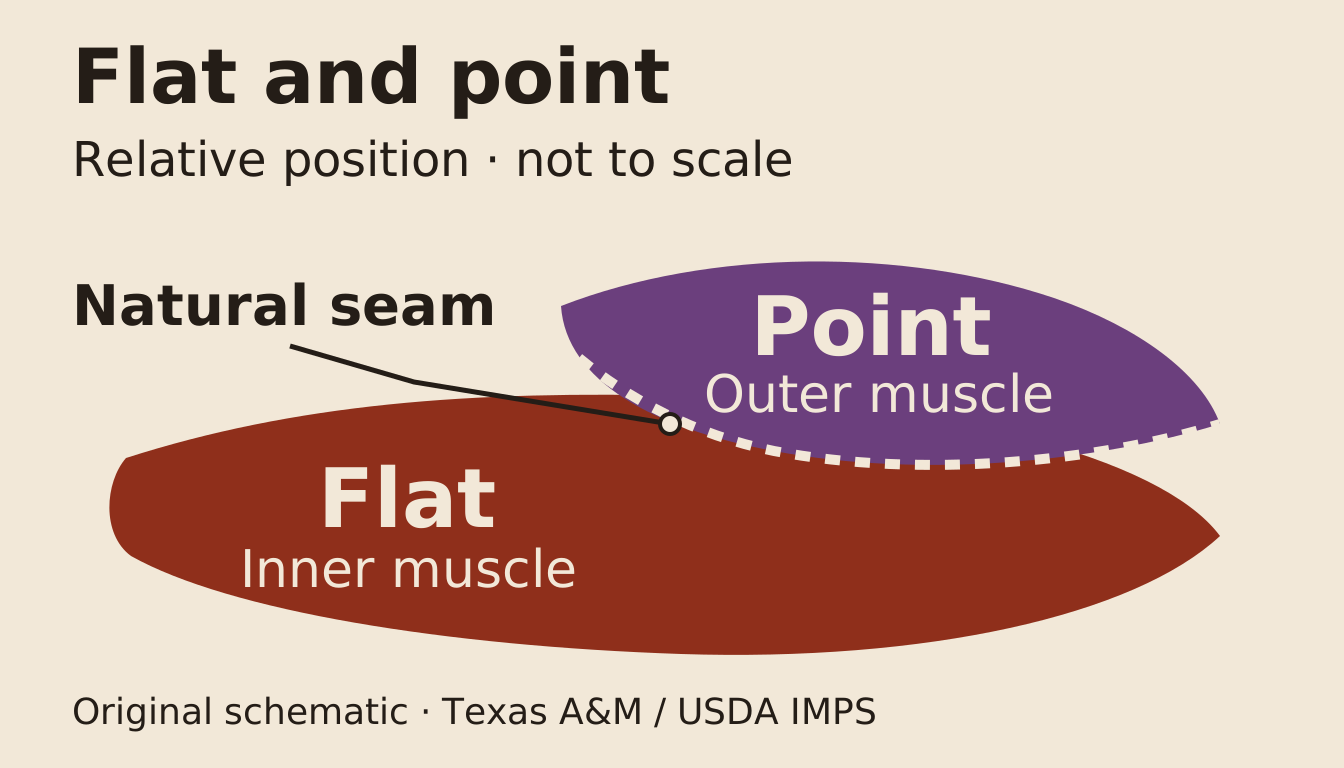
- Flat: Texas A&M identifies the whole flat as the deep pectoral muscle on the inner, or medial, surface. [3]
- Point: the superficial pectoral muscle occupies the outer, or lateral, portion; USDA’s individual-muscle point specification names M. pectoralis superficialis. [3] [4]
- Natural seam: Texas A&M shows the muscles separated along the seam between them, rather than by a single crosswise cut through the whole brisket. [3]
USDA’s November 2014 IMPS document defines item 120A, boneless flat cut (individual muscle), as only M. pectoralis profundi, and item 120B, boneless point cut (individual muscle), as only M. pectoralis superficialis. [4] These are raw purchasing specifications, not a promise that a restaurant’s “moist” serving contains only item 120B.
A raw retail half can contain both
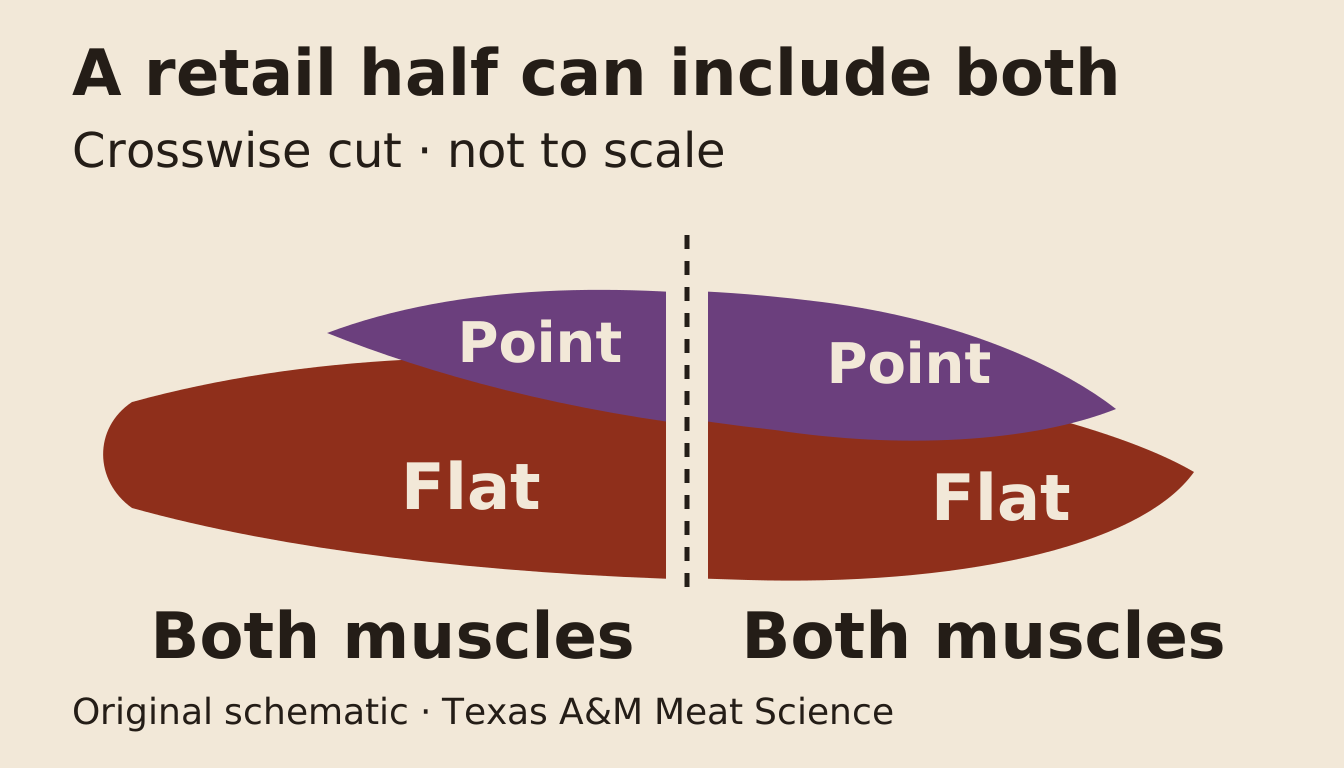
Texas A&M’s retail examples show crosswise brisket halves with both major muscles exposed. [3] A package called a flat half or point half is therefore not necessarily a single muscle separated along the seam. [3]
A short counter script
- State the preference: “I prefer less fat,” or “I prefer the fattier option.” Ask which brisket choice fits that preference here.
- Confirm the term: “When this menu says moist, does that mean point, another portion, or simply the name of this option?”
- Confirm the order: “Can I choose that cut for this order, and what quantity is included?” For Churchrow’s Holy Roller, keep its no-substitution and availability qualifier in mind. [9]
Sources and method
- Beef Checkoff: Brisket Flat HalfSource checked · www.beefitswhatsfordinner.com
- Beef Checkoff: Brisket Point HalfSource checked · www.beefitswhatsfordinner.com
- Texas A&M Meat Science: 120 Beef Brisket, Deckle-Off, BonelessSource checked · meat.tamu.edu
- USDA AMS IMPS Fresh Beef, Series 100, effective November 2014, printed pp. 40–41Source checked · www.ams.usda.gov
- Black’s BBQ: New Braunfels online menuSource checked · order.blacksbbq.com
- Black’s BBQ: A First-Timer’s Guide to Eating Texas BBQ the Right WaySource checked · www.blacksbbq.com
- Rudy’s official shop: 1/2 Texas Brisket, mail-order product descriptionSource checked · shop.rudysbbq.com
- Rudy’s: Austin–620 location menuSource checked · rudysbbq.com
- Churchrow Tejas BBQ: official menu, Holy Roller samplerSource checked · www.churchrowbbq.com
How this article is prepared
Researched and drafted with AI assistance from the cited sources. Examples and calculations retain their stated assumptions; illustrations do not establish restaurant visits or equipment tests. Additional editorial and image review is pending.
About BBQ Explorer